Specify honestly
Selection starts with the limits of the job, including oil volume, duty cycle, side load risk and power availability.
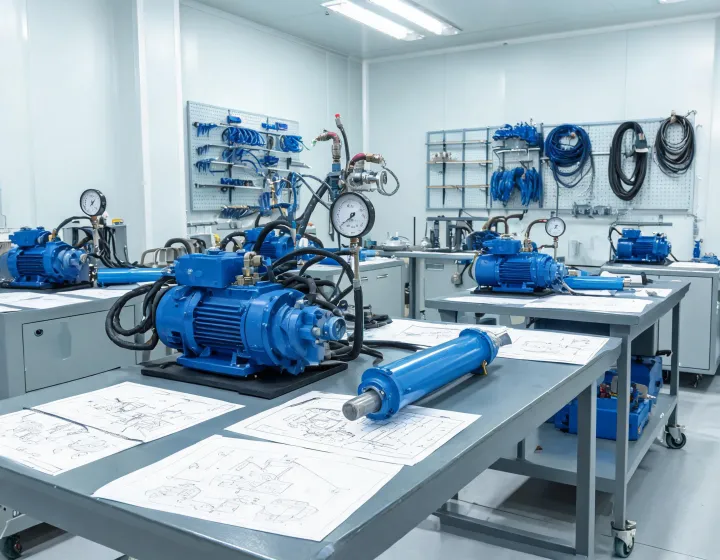
Power Team is presented here as a technical hydraulic tool partner for buyers who must connect product selection with jobsite consequences. A pump that works on a catalog page still has to move oil through the right hose, hold pressure through the right valve and match the cylinder that is actually under the load.
The brand voice is direct because the work is direct. Hydraulic jacks, cylinders, pullers and torque wrench pumps are used where a mistake can delay a shutdown, damage a fixture or put workers in a difficult lift plan. The site therefore prioritizes selection logic, serviceability and application evidence over broad lifestyle claims.
Power Team serves a corner of the tool market where professionals often know the load before they know the part number. The conversation begins with tonnage, stroke, fixture access, return method and power availability. From there, the right hydraulic set is built around control rather than a single headline specification.
The brand has to be useful to a plant mechanic checking a press, a distributor replacing a hydraulic hand pump, a millwright choosing a puller set and a shutdown supervisor comparing torque wrench pumps for flange work. Those people share one expectation: the equipment should be understandable before it is put under pressure.
Good hydraulic support turns a vague force problem into a specified system: pump, cylinder, hose, gauge, coupler and procedure.
This is why Power Team content emphasizes model comparison, accessory compatibility and service notes. It is not enough to say that a tool is heavy duty. The buyer needs to know how it behaves when the cylinder nears full stroke, how the pump responds under load and what service parts keep the setup productive.
Selection starts with the limits of the job, including oil volume, duty cycle, side load risk and power availability.
Tools are judged after the first repair window, so seals, couplers, gauges and parts paths stay visible.
Pressure readings, flow behavior and cylinder response are treated as facts that guide the next action.
Documentation and inquiry paths are written for the people who plan the lift, press, pull or bolting job.
Hydraulic tools earn trust in maintenance bays, fabrication shops, utilities, heavy equipment yards and process plants. A reliable recommendation saves time when a line is down, a bearing is seized or a machine base has to be lifted with limited clearance.
Power Team's content structure mirrors that environment. Products are grouped by practical use, service questions ask for the details that affect pressure performance and the engineering page turns specifications into reviewable decisions. The result is a site that behaves like a technical counter rather than a showroom.
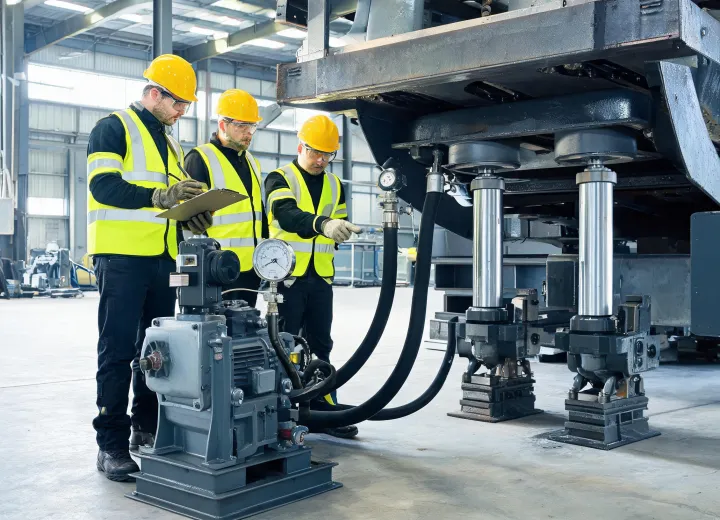
Power Team can help review pressure, stroke, oil volume and accessory needs before a pump or cylinder package is specified.
Share the pump type, cylinder capacity, working pressure or job condition. A technical specialist will respond with a practical next step.