Why I Check Every Power-Team Hydraulic Puller and Hose Before It Ships
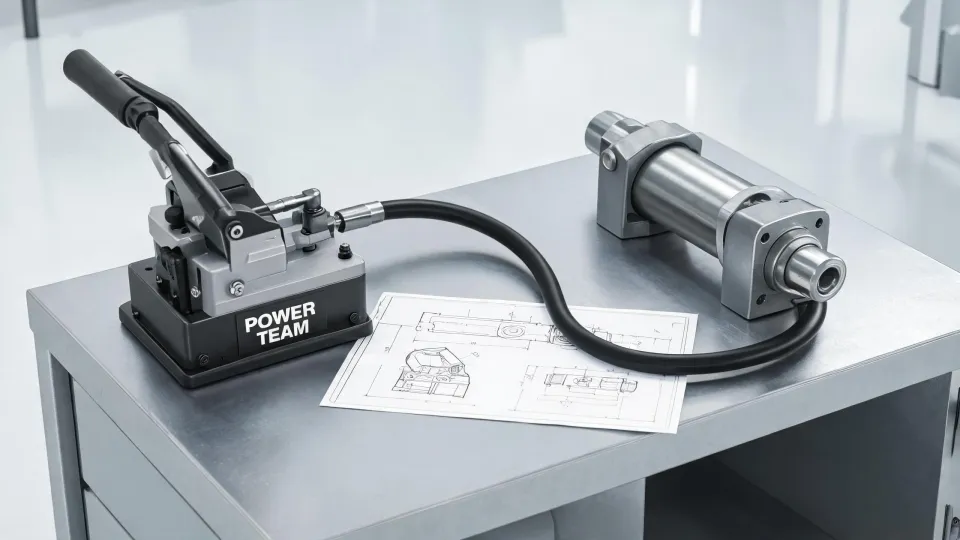
If you buy hydraulic tools by comparing unit price, you are not saving money. You are delaying the cost until it shows up as downtime, rework, or a second order. I have managed the hydraulic tooling and maintenance budget at a 180-person industrial maintenance company for six years. That budget runs about $240,000 annually across pumps, cylinders, presses, torque wrenches, jacks, pullers, hoses, and the small parts nobody wants to track. When I first started buying power-team equipment, I assumed the lowest initial quote was always the best choice. Three budget overruns later, I learned that total cost of ownership (i.e., not just the unit price but everything it drags behind it) is the only number that matters.
That is why my rule now is simple: prevention over cure. Check the order before it becomes a work order.
The hidden cost starts before the invoice
In Q2 2024, I audited our 2023 spending on hydraulic hoses and pullers. I compared quotes from three suppliers for a power team hydraulic puller and a set of power team hydraulic hose assemblies. One quote was about 12% lower on paper. Then I added the missing pieces: coupler verification, crimp inspection, pressure-test documentation, and the labor to return two wrong-thread hoses. The lower quote was not lower anymore. The difference was roughly 17% once the real costs landed.
It is tempting to think a hose is a hose and a puller is a puller. But hydraulic systems are exactly that: systems. A power team hydraulic puller may need a specific coupler, thread, and hose rating. A power team hydraulic hose may look identical to another until you check the crimp and bend radius. Per FTC guidelines (ftc.gov), advertising claims must be truthful, not misleading, and substantiated with evidence. So when a supplier says a hose is universal, I ask for the spec sheet. If they cannot produce it, the claim is not a spec. It is marketing.
I still prefer power-team for full-line coverage because one catalog reduces the number of coupler mismatches. That is not a loyalty thing. It is a complexity-reduction thing. The SPX heritage matters less to me than whether the model number, thread data, and pressure rating are documented in the same place.
The pattern is always the same. A wrong fitting creates a rush order. A rush order adds freight. Freight adds a purchasing exception. The exception adds approval time. And the crew waits. That waiting time is the real invoice. In our shop, one shift of idle hydraulic press work is roughly $2,400 in deferred production. That number is not on any hydraulic tool quote, but it is on my TCO sheet.Three checks that cost less than a redo
1. Verify the connection before the tool ships. For a power team hydraulic puller, I ask for a photo of the coupler and the hose end. I check the thread type, the quick-disconnect size, and the pressure rating against our existing pumps. I am not 100% sure, but I think we lost about $1,800 in overtime two years ago because one hose assembly arrived with the wrong fitting. The fix was a $90 part. The delay was two shifts.
2. Match the tool to the fastener, not the catalog page. This is where a joker combination wrench or an adjustable wrench can create expensive scrap. Everyone asks which way to turn adjustable wrench. The honest answer is that it depends on the jaw orientation and the fastener direction. On a standard right-hand thread, you usually turn counterclockwise to loosen, but an adjustable wrench can be flipped. If the jaw is loaded on the wrong side, it can slip, round the nut, and turn a five-minute job into a removal project. With a joker combination wrench, the open end and box end are not interchangeable for every access angle. Check the direction and the fit before you pull hard. Five minutes of verification beats five days of correction.
3. Confirm the pump or motor details, even on non-hydraulic items. We also buy drainage equipment for pits and sumps. Last year, a 1-ma submersible pump 521203 looked like a drop-in replacement for a failed unit. It was not. The voltage matched, but the discharge size and duty cycle did not. We caught it during receiving inspection because the checklist required a nameplate photo. That one check avoided a flooded pit and an emergency rental.
The counterargument: 'We do not have time to inspect everything'
To be fair, inspection adds upfront work. I get why a maintenance team with a backlog wants boxes opened and tools installed, not photographed and measured. Granted, not every low-value order needs a full teardown. But critical hydraulic tools do. The cost of a failed power team hydraulic hose is not the hose. It is the fluid loss, the cleanup, the downtime, and the injury risk if pressure is released unexpectedly.
After tracking 150-plus orders over six years in our procurement system, I created a 12-point receiving checklist for hydraulic items. It covers coupler type (the fitting that joins hose to tool), hose crimp, pressure rating, thread match, wrench direction, and nameplate data. I built it after my third mistake, not before. It took me three years and about 150 orders to understand that the receiving dock is a cost-control function, not a storage area. That checklist has saved us an estimated $8,000 in potential rework. Do not hold me to this, but the biggest saving was probably avoided downtime, not parts.
There is another objection: vendors should catch this. Sometimes they do. Sometimes they do not. (Not that the quote ever mentions that.) A supplier can know their catalog but not your pump, your pit, or your crew's habits. The final compatibility check is still yours.
What I do now
Our procurement policy now requires quotes from at least three vendors for hydraulic tool orders over $2,500. I run a simple TCO spreadsheet that includes freight, fittings, test documents, return labor, and expected service life. For power-team items, I ask for the exact model, coupler data, and hose specification before approval. For hand tools like a joker combination wrench, I buy one sample first when the access angle is unusual. For adjustable wrenches, I train new techs on which way to turn adjustable wrench based on jaw loading, not guesswork. For pumps like the 1-ma submersible pump 521203, receiving inspection includes a nameplate photo and a quick run test before it goes to the pit.
None of this is glamorous. It is just cheaper than correcting a mistake after the system is pressurized.
Prevention over cure is not a slogan for safety meetings. It is a procurement strategy. If you only negotiate the unit price, you are still paying for rework later—just on a different line of the budget.

Amara Nwosu
Amara Nwosu is an independent hydraulic tool and pump systems analyst covering jacks, cylinders, pullers, torque wrenches, hand pumps, power pumps, and porta-power equipment. She applies ISO 4413 safety principles while examining rated pressure, cylinder force, stroke, oil volume, flow, return type, hose condition, load holding, pressure loss, and relief protection. Her technical guides help maintenance and construction teams configure compatible systems, verify safe capacity, and diagnose slow or unstable operation.