Your Hydraulic Tools Cost 40% More Than the Quote — Here's Where the Money Actually Goes
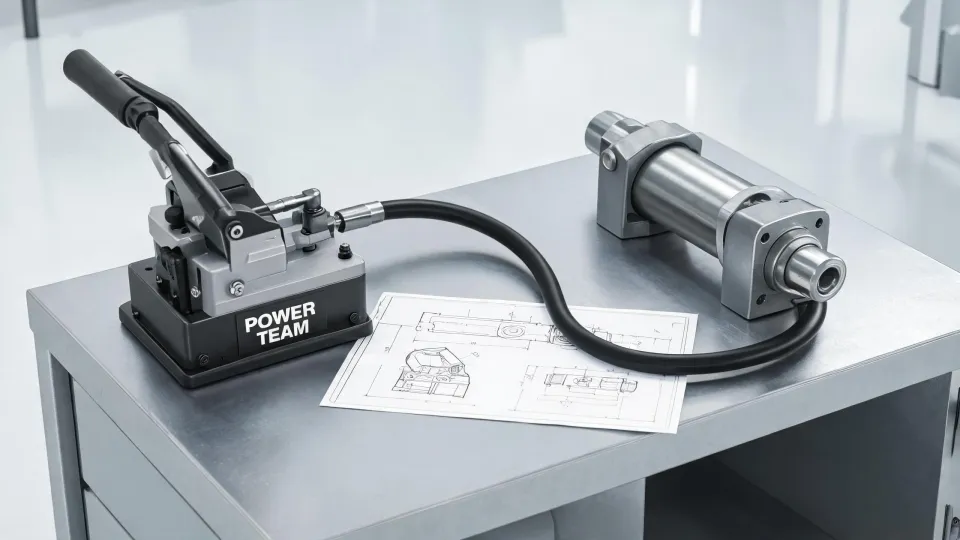
The Quote Looked Fine. The Invoice Didn't.
In Q2 2024, I pulled our hydraulic tool spending into a single spreadsheet for the first time. Not by vendor. Not by quarter. By total cost of ownership per unit.
The number that came back: we were spending roughly 40% more per tool than the original quotes suggested.
I'm a procurement manager at a 140-person industrial maintenance company. I've managed our tools and equipment budget — about $180,000 annually across hydraulics, hand tools, and pumps — for 6 years. I've negotiated with 30+ vendors and documented every order in our cost tracking system.
And I still missed this for years. Because I was looking at the wrong number.
The Surface Problem: Everyone Checks Unit Price
When you're buying a power team hydraulic hand pump or a power team hydraulic hose, the first thing you compare is the quote. Vendor A says $1,200. Vendor B says $980. You go with B. Done.
That's what I did for years. And on paper, it worked — we saved 15-20% on initial purchase costs by shopping around.
Then I started tracking what happened after the purchase.
Most buyers focus on per-unit pricing and completely miss the cost of what happens in months 3 through 36.
The quote is a snapshot. The total cost is a movie. And the movie has a lot more scenes than anyone budgeted for.
The Deeper Problem: Three Cost Categories Nobody Tracks
1. The Compatibility Tax
This one took me two years to see clearly.
We bought hydraulic hoses from one vendor, fittings from another, and a hex wrench set from whoever had it cheapest that week. Individually, each purchase looked efficient. Together, they created a mess.
Here's what happened: fittings didn't seat properly on hoses from a different manufacturer. We didn't discover this in the shop — we discovered it during a scheduled maintenance window when the replacement hose wouldn't seal. That one compatibility failure cost us 6 hours of downtime and a $340 emergency parts order from a local supplier.
The "cheap" hose saved us $45 upfront. The incompatibility cost $340 plus labor.
Standards exist for a reason (ISO 4413 for hydraulic fluid power systems, for example), but they don't guarantee cross-vendor compatibility in practice. That's a detail most procurement teams — including mine, for years — never account for.
2. The Downtime Multiplier
In 2023, I audited our maintenance logs against our purchase records. The pattern was ugly.
Tools that cost 20-30% less upfront were failing 2-3x more often within the first 18 months. Not catastrophic failures — the kind that require a rebuild kit, a replacement seal, or a full swap during a scheduled shutdown.
Each failure had a cost beyond the part itself:
- Technician time to diagnose and replace
- Production delay if the tool was on a critical path
- Rush shipping for the replacement
- Administrative time processing the warranty claim (when it was covered — often it wasn't)
When I added those up for our 5-ton and 10-ton hydraulic pullers, the "budget" units were costing us roughly $1,100 more per unit over 3 years than the higher-priced alternatives.
The quote was $800 cheaper. The ownership was $1,100 more expensive. That math doesn't show up on a purchase order.
3. The Small-Tool Blind Spot
This one's embarrassing because it's so obvious in hindsight.
We spent hours analyzing hydraulic pump specs and hose pressure ratings. Meanwhile, the 5 in. mini pliers wrench and hex wrench set we issued to every technician were whatever was on sale.
Those small tools lasted 4-6 months on average. Stripped hex keys. Pliers with jaws that stopped gripping. A $15 tool failing every few months across 22 technicians adds up faster than a $1,500 pump failing once.
I ran the numbers: we were spending $3,800 annually replacing cheap hand tools. When we switched to a standardized, higher-quality set, that number dropped to $1,200. The tools cost more per unit. The annual spend dropped by 68%.
The question everyone asks is "what's your best price?" The question they should ask is "what does this actually cost us over 3 years?"
What This Actually Costs
Let me put real numbers on it. These are from our 6-year audit, adjusted to annual averages:
- Compatibility failures (mismatched hoses, fittings, adapters): ~$4,200/year in emergency orders and downtime
- Premature tool failure (below-average lifespan units): ~$6,800/year in replacements, labor, and delays
- Small-tool replacement (hex keys, pliers wrenches, basic hand tools): ~$3,800/year before standardization
Total: roughly $14,800 per year in avoidable costs. On a $180,000 budget, that's 8.2% — not the 40% I mentioned earlier. The 40% figure came from looking at specific product categories where the gap was widest (pumps and pullers, mainly).
Across the whole budget, the waste was smaller but still significant. And it was invisible because it was spread across dozens of line items, none of which looked alarming on their own.
What Actually Worked (Short Version)
I won't pretend this is a complete solution. It's what worked for us, in our context — a mid-size industrial maintenance operation with predictable, recurring needs.
Three changes made the biggest difference:
- Total cost tracking per tool: We added a column to our procurement spreadsheet for "3-year projected cost" that includes estimated maintenance, compatibility risk, and expected lifespan. It's not perfect. It's better than unit price alone.
- Standardized consumables: We consolidated hoses, fittings, and small hand tools to fewer vendors. This reduced compatibility failures by roughly 70% in the first year.
- Stopped chasing the lowest quote on critical tools: For anything that touches a production schedule — hydraulic pumps, cylinders, presses — we now evaluate on documented reliability data, not just price.
This approach worked for us, but we're a mid-size B2B operation with predictable ordering patterns. If you're a seasonal business with demand spikes, or if you're running a single-location shop with no dedicated procurement staff, the calculus might look different.
I can only speak to domestic industrial operations. If you're dealing with international sourcing or imported equipment with different support structures, there are probably factors I'm not aware of.
The Thing I'd Tell Myself 6 Years Ago
Stop optimizing for the quote. The quote is the beginning of the cost story, not the end.
The vendors who consistently delivered the lowest total cost for us weren't the cheapest upfront. They were the ones whose products didn't surprise us — no compatibility issues, no early failures, no emergency calls at 6 AM because a pump quit during a critical maintenance window.
That reliability has a number. I just wasn't tracking it.
This analysis is based on our internal procurement data from 2019-2024. Pricing and product availability change — verify current specs and costs before making budget decisions.

Leila Farzan
Leila Farzan is an independent welding, abrasives, and cutting accessories analyst covering welders, electrodes, wire, grinding wheels, flap discs, cutting discs, drill bits, saw blades, hole saws, and router bits. She references ISO 525 abrasive-product dimensions and ISO 9606-1 welding qualification concepts while examining wheel speed, grit, bond, electrode class, duty cycle, kerf, tooth geometry, and material compatibility. Her guides help fabricators choose consumables, control process risk, and compare cut or weld quality.