From Power-Team Hydraulics to Impact Wrench Torque: What I Actually Check Before Approving Any Industrial Tool
The Short Answer
As a quality and brand compliance manager at an industrial maintenance company, I review every tool order before it reaches our service crews—roughly 200+ items annually. After four years of doing this, here's the conclusion I'd give my past self: the cheapest tool that meets spec is rarely the cheapest tool in practice. Lost time, re-orders, emergency replacements, and crew downtime always cost more than the upfront savings.
What you're actually buying—or should be buying—is certainty. Certainty that the hydraulic pump parts will fit. Certainty that the impact wrench delivers the torque it claims. Certainty that a packout wrench set won't round off bolts on the first use.
That sounds obvious. It took me two budget overruns and one very uncomfortable vendor meeting to actually learn it.
Why You Should Trust This Take
When I first started managing tool procurement, I assumed the lowest quote was always the best choice. Why wouldn't it be? Same specs, lower price. Three budget overruns later, I learned about total cost of ownership.
I've rejected about 12% of first deliveries in 2024 alone—mostly for spec inconsistencies in SPX Power Team hydraulic pump parts and torque wrenches that didn't match their rated values. When you're equipping crews that work on 100-ton hydraulic presses, a spec that's "close enough" isn't close enough.
Everything I'd read about procurement said to always get multiple quotes. In practice, for our specific use case—hydraulic equipment and high-torque tools—the relationship consistency often beat marginal cost savings. Knowing your vendor's actual quality control process matters more than saving 8% on a purchase order.
Hydraulic Equipment: Where Specs Actually Matter
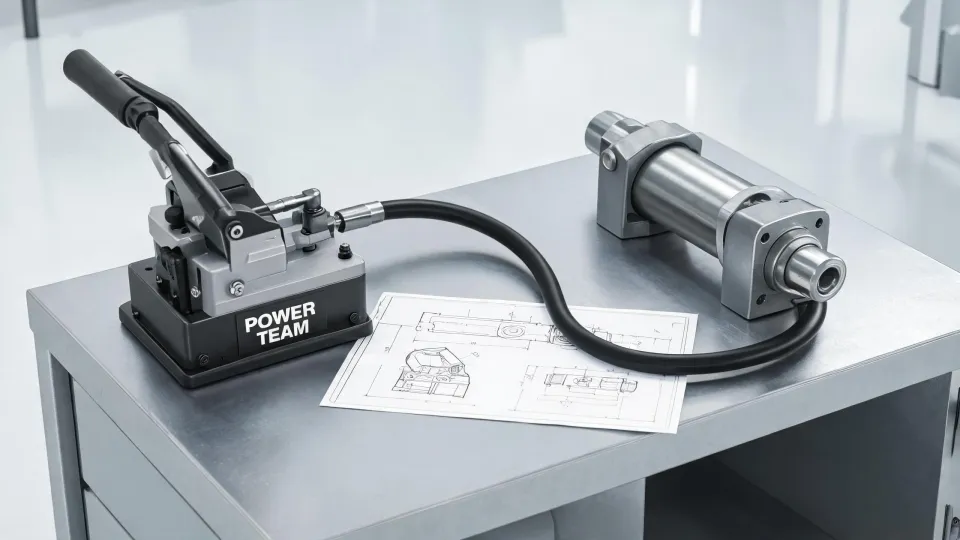
We run SPX Power Team hydraulic jacks and pumps across our shop. If you've ever tried to source SPX Power Team hydraulic pump parts from a third-party supplier, you know the drill: some fit, some "almost" fit, and some will fail under load pressure.
Here's what I check now before any hydraulic jack or pump purchase:
- Pressure rating verification against the manufacturer's published spec—not the distributor's re-labeled number
- Part number cross-reference with SPX's official catalog (I keep a printed copy circa 2023, and yes, it's outdated, but it still catches mismatches)
- Seal material compatibility—this is where cheap parts fail first
- Lead time and restocking guarantees in writing
The conventional wisdom is to stock the cheapest replacement parts. My experience with 200+ hydraulic components suggests that quality control at the part level prevents 80% of in-field failures.
Impact Wrench Torque: The Spec Nobody Reads Correctly
How much torque is good for an impact wrench? Depends entirely on what you're fastening—and I mean entirely.
A common mistake (which I made early on) is buying the highest-torque model available. More is better, right? No. Over-torquing is just as damaging as under-torquing—it shears bolts, cracks housings, and creates liability you don't want.
For our maintenance crews working on industrial fasteners, we settled on a range: 600–1,200 ft-lbs for heavy equipment, 200–400 ft-lbs for general assembly. The exact number depends on bolt grade, thread condition, and whether you're using a torque stick. If you've ever snapped a bolt head and had to drill it out on a deadline, you know why this matters.
One vendor told me their impact wrench "delivers up to 1,500 ft-lbs." I asked for the test protocol. They didn't have one. We didn't buy it.
The Small Stuff That Isn't Small
I have mixed feelings about packout wrench sets. On one hand, the convenience is real—organized, portable, everything in one box. On the other hand, I've seen too many sets where the wrench tolerances were so loose they'd round a bolt head before breaking it free.
If you're specifying a packout set for field crews, check three things: wrench material hardness (HRC rating), the case latch durability, and whether individual pieces can be replaced without buying the whole set again.
Old air compressor manuals—I mention these because we still run equipment from the early 2000s, and finding documentation for service and parts is genuinely difficult. If you're maintaining legacy equipment, scanning and digitizing manuals before they disintegrate is a small investment that saves hours of guesswork later.
When My Rule Doesn't Apply
To be honest, my "buy for certainty" approach doesn't work for every situation. If you're buying a one-off tool for a job that finishes next week, the math changes. If the tool isn't safety-critical and failure is merely annoying rather than dangerous, a cheaper option might be perfectly rational.
I also don't want to pretend that expensive always means better. I've seen premium-priced hydraulic equipment fail faster than mid-tier alternatives because the manufacturer cut corners on seals or quality control while maintaining the brand name. Price is a signal, not a guarantee.
What I'd say is this: don't pay for certainty you don't need. But when you do need it—when downtime costs more than the tool, when a spec failure creates safety risk, when your crew is on a deadline—pay for it without hesitation. The invoice is one-time. The consequences of cheaping out aren't.

Maren Jorgensen
Maren Jorgensen is an independent hand tool and torque applications analyst covering wrenches, pliers, screwdrivers, hammers, sockets, ratchets, hex keys, and tool sets. She applies ISO 6789-1 torque-tool conformance principles while examining jaw capacity, leverage, fastener engagement, torque range, accuracy, handle geometry, and material hardness. Her practical guides help tradespeople and procurement teams select suitable tools, plan controlled tightening, and compare durability without relying on brand reputation alone.