Power Team Hydraulic Hand Pump: An Office Buyer's Honest Take After 5 Years
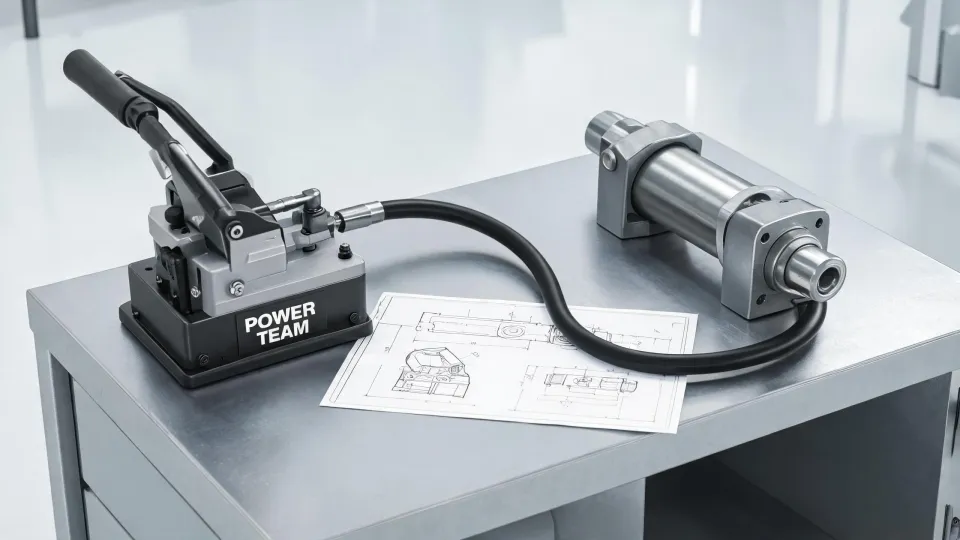
Buy the right model, buy it with parts support, and don't think of a Power Team hydraulic hand pump as a single purchase—think of it as a system. If your maintenance team needs one, my honest answer after five years of ordering these tools is yes, it's worth it, but only if you match the model to the job and buy from a supplier who stocks genuine parts. A $400 cheaper "compatible" pump can end up costing you the whole project when it dies halfway through a pressing job. That's not theory. That's a call I almost made in 2023.
I'm the office administrator for Harwick Industrial Services, a 180-person company that does equipment repair and custom fabrication. I manage all the maintenance and shop supply purchasing—roughly $140,000 a year across eleven vendors. Maybe $135,000; I'd have to check the ledger. I report to both operations and finance, so I get it from both sides: the shop wants things fast, and accounting wants the paperwork right.
The Short Version
The Power Team hydraulic hand pump is a legitimate workhorse for shops that do regular lifting, pressing, and pulling work. Many P-series models are rated up to 10,000 psi (700 bar), which is the standard convention for industrial hydraulic tools across the fluid power industry. The SPX heritage behind the name means you're getting decades of hydraulic engineering, not a pump built down to a price. But here's the part nobody tells you: the pump is only half the tool. The hose, the couplers, the cylinder, and the spare seals are the other half. Buy from a supplier who can talk you through the whole system, or you might end up with the wrong pump from the right brand. Trust me on this one—I've done it.
Why Listen to Me
I've been in this purchasing seat since early 2020. When I took over, I was processing about 60-80 orders a year for wrenches, hoses, drills, and whatever else the maintenance crew needed. Over time, the hydraulic side of our business got bigger—larger pressing jobs, 100-ton cylinders, custom fabrication work that depends on reliable force. I've ordered Power Team pumps in the P-39, P-55, and P-80 lines, gone through reorders, sourced replacement handles and release valves, and learned the hard way what to ask before I hit "place order."
In our 2024 vendor consolidation project, I cut the supplier list from seventeen to eleven. The way I decided who stayed was simple: which vendors could actually deliver replacement parts when we needed them, and which ones gave us invoices that didn't get rejected by finance. The Power Team distributor kept their spot. A couple of cheaper suppliers didn't.
Because price without documentation is a trap. In 2022, a new vendor offered a hydraulic pump about $350 below our regular supplier's price. The upside was a visible win on the monthly cost report. The risk was that a new vendor might not have proper invoicing or parts support. I kept asking myself: is $350 worth potentially fighting with finance and getting stuck without warranty backup? I placed the order anyway. The pump was fine, but the vendor couldn't produce a proper invoice—just a handwritten sales slip. Finance rejected the expense report, and I ate the $350 out of the department budget. Nobody could confirm whether the pump warranty was even valid without the paperwork. The "cheap" option was the most expensive one in the end.
The First Mistake: Same Words, Different Pump
My first real blunder with Power Team happened in 2021. The shop supervisor sent a request: "Need a Power Team hydraulic hand pump for the new cylinder." I replied "Got it" and went to our usual industrial supplier. What I didn't ask was: which cylinder? how many tons? how fast does the ram need to move?
The pump that arrived was a Power Team pump and technically a hand pump. But it was the P-39, a lighter model meant for small single-acting cylinders. The shop needed the P-80, which moves significantly more oil per stroke and delivers the flow a 100-ton setup needs to move at a useful speed. We were using the same words—"Power Team hydraulic hand pump"—but meaning two different tools. We found out when the tool went on the press, the ram barely moved, and the supervisor called me. Two days and one rush freight bill later, I had a new rule: ask what cylinder it's feeding and what pressure range they expect before ordering anything.
Why the SPX Heritage Matters
Part of the reason I keep coming back to Power Team is the SPX connection. The Power Team name came from SPX, one of the older and more established names in hydraulic tools, and the engineering DNA carried into the current lineup. When buyers search "power team spx hydraulic pump," they're usually looking for that industrial-grade reliability, and it's genuinely there. These hand pumps are built for hard service, not weekend light duty.
The SPX footprint also means replacement parts actually exist. Seals, release valves, pump handles, hose assemblies—they're available if you buy from a distributor who stocks them. That matters more than you'd think. When a pump goes down in the middle of a job, "we don't stock parts for that model" isn't an acceptable answer.
Pumps Are Confusing: The High-Temp Sump Pump Lesson
Here's something that surprised me in this job: the word "pump" covers wildly different machines. The same month we ordered a Power Team hydraulic pump, the facilities team asked me to source a high temp sump pump for a wash-down pit. That's a completely different animal. A hydraulic hand pump creates pressure to move a cylinder. A high temp sump pump moves water or coolant, runs nearly continuously, and survives heat that would wreck a hydraulic pump.
If I hadn't asked two clarifying questions—what fluid is it moving, and will it run continuously—we could have ordered the wrong machine. You can't substitute a hydraulic pump for a sump pump, no matter how strong the brand name is. Same word, completely different job. What I mean is, before buying any pump, understand what task it's doing. The mechanism has to match the application.
Replacement Parts: The Real Test of a Supplier
When I search "tool box replacement parts" online, I mostly get drawer slides and casters. But when I say "replacement parts" in our shop, I'm talking about pump seals, pressure release valves, and the internal kit that keeps a 10,000 psi pump from leaking. Same phrase, totally different catalogs.
What I recommend to other office buyers, after doing this for five years:
- Order the seal kit and spare hoses at the same time as the pump. You won't remember to do it later, and when you need them, you need them immediately.
- Ask the vendor up front if they stock genuine Power Team parts or if they'll have to special-order them. That one question tells you who you're dealing with.
- Keep a photo of the model tag somewhere everyone can find. I've lost count of the Friday-at-4:55 texts asking for a model number.
The Honest Limitations
I'm not going to claim a Power Team hand pump is right for everyone, because it isn't. Here's where I'd tell you to skip it:
- If you do one or two pressing jobs a year and you're not in a hurry, renting a hydraulic setup or using a manual press can make more sense than spending $400 to $800 on a pump you'll rarely use.
- If you need continuous pumping—like a high temp sump pump handling drainage—a hand pump is the wrong tool entirely. You need an electric or engine-driven pump for that.
- If all your jobs are light duty and low cycle, a standard bottle jack can get it done. A 10,000 psi hydraulic hand pump is overkill for occasional small tasks.
And don't fall for the idea that tools never need maintenance. They do. Seals wear, hoses crack, and fluid picks up contamination. A pump on a regular check-and-clean schedule will outlast one that's ignored until it fails.
The Warranty Question Everyone Asks
Because I'm the purchasing person, I get warranty questions about everything, even personal ones. The classic: "does home warranty cover sump pump?" I tell people honestly: usually no. Most home warranty policies cover built-in systems, and a standalone sump pump typically falls outside standard coverage or needs a separate rider. I can't know their specific contract, so I'd rather say "check your policy" than guess and have them file a claim that gets denied. The same logic applies on the business side: know exactly what your warranty covers before you rely on it.
What I'd Tell Another Buyer
The Power Team hydraulic hand pump is the right call for a shop that needs reliable, repeatable force. Buy the model that matches your cylinders, buy it with spare parts, and buy it from a supplier who can answer real questions. If price alone is the deciding factor, you haven't priced in the risk of a failed job halfway through a press. That's the lesson I get paid to carry. I'll take quality over discount every single time.

Maren Jorgensen
Maren Jorgensen is an independent hand tool and torque applications analyst covering wrenches, pliers, screwdrivers, hammers, sockets, ratchets, hex keys, and tool sets. She applies ISO 6789-1 torque-tool conformance principles while examining jaw capacity, leverage, fastener engagement, torque range, accuracy, handle geometry, and material hardness. Her practical guides help tradespeople and procurement teams select suitable tools, plan controlled tightening, and compare durability without relying on brand reputation alone.