Power Team Repair, Hydraulic Oil, and the Equipment Checks I Don’t Skip
-
The First Thing to Get Right on Any Power Team Repair
-
The Hydraulic Oil Problem Nobody Talks About
-
A Quality Inspector's Take on the Compact Washer and Dryer
-
Your Welder Parts Dealer Is a Quality Check, Too
-
Can a Submersible Pump Be Fully Submerged? Yes—With Limits
-
What I Won't Claim About Power Team or Hydraulic Equipment
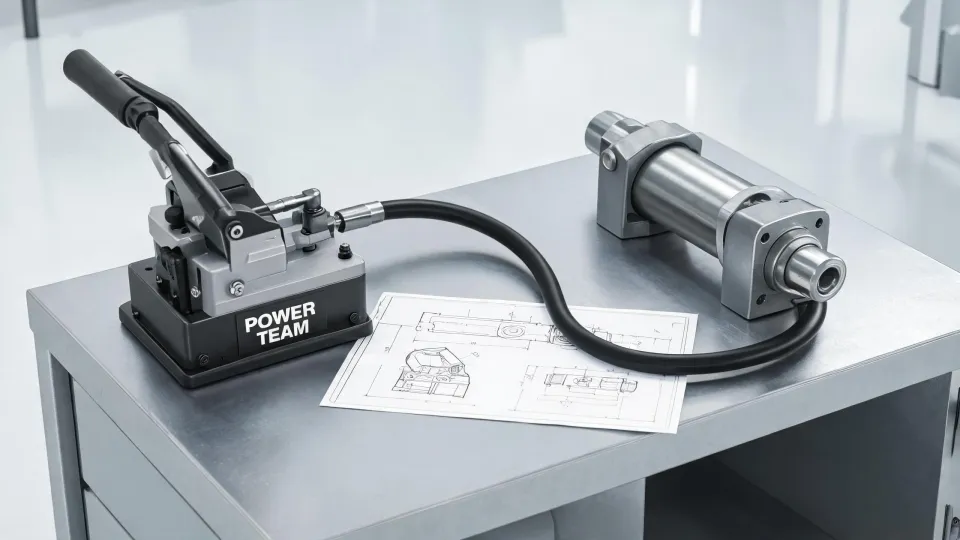
Here's the short version: A Power Team repair is only as good as the hydraulic oil you put back in and the way you verify the job. We review roughly 200 repaired or new industrial tools a year—maybe 180, I'd have to check our system—and in Q1 2024 I rejected 14% of the first deliveries that crossed my bench. Not because the equipment was dead. Because someone skipped a specification: ATF instead of ISO hydraulic oil, no pressure test record, a hose that looked fine but was labeled wrong. All avoidable. All tracked in our return logs.
I'm a quality and compliance manager in the industrial equipment sector. That means I'm the person who says 'no' when everyone else wants to ship. It also means I've learned to trust the brand name Power Team but never trust a repair without evidence.
The First Thing to Get Right on Any Power Team Repair
Before you open a pump or cylinder, get the model number and serial number. If the unit has been repaired before, ask who did it and what they replaced. In my first few years, I made the classic rookie error: I assumed 'standard' meant the same thing to every shop. It doesn't. One vendor's 'standard repair' is another's 'we fixed the visible leak and painted the housing.' That mismatch cost a $600 redo and taught me to put the repair scope in writing every single time.
So when we schedule a Power Team repair, our work order includes:
- Model, serial, and current fluid type
- Visual inspection notes for rod scoring, corrosion, and fitting wear
- Replacement seal kit and part source
- Hydraulic oil spec—usually Power Team hydraulic oil or the equivalent ISO grade in the service manual
- Pressure test requirement with a calibrated gauge
That last point is the one I'm most stubborn about. A rebuilt 10-ton cylinder is only safe if it's pressure-tested after assembly. The gauge needs to be NIST-traceable and calibrated within the last 12 months. If a vendor tells me they 'tested it,' I ask for the number. If they can't produce it, I don't sell it. This isn't distrust; it's physics. You can't see a 10,000 PSI leak until it lets go.
Before any inspection or repair, lock out and tag out the system. OSHA's lockout/tagout standard, 29 CFR 1910.147, covers servicing and maintenance of hydraulic equipment. It's the starting point for every job, not a suggestion.
The Hydraulic Oil Problem Nobody Talks About
What most people don't realize is that hydraulic oil is not just 'oil.' It's the medium that transfers pressure, lubricates seals, and carries heat away. Put the wrong fluid in a Power Team pump and you may not notice anything for a few cycles. Then the seals swell, the valve sticks, or the pump sounds like it's chewing gravel.
I didn't fully understand the value of Power Team hydraulic oil until the ATF incident in April 2022. We had a batch of repaired units come back from an outside shop. They looked great. New paint, new decals. But they'd filled one cylinder with automatic transmission fluid because 'it's all hydraulic fluid, right?' No. It's not all hydraulic fluid. ATF has a different viscosity index and additive package. On the first full stroke, the rod seal wept. The vendor called it 'within industry standard.' We rejected the whole batch. The redo and delay cost us about $18,000.
Here's something vendors won't tell you: a standard repair quote often doesn't include draining and flushing the circuit. If you send a cylinder in for new seals and the old oil stays in the system, that rebuilt part is sitting in contaminated old oil. Our repair protocol now always includes a drain and flush with the specified Power Team hydraulic oil—or the exact ISO VG grade in the manual. Don't guess. Look it up.
Power Team hydraulic oil is a specific formula from the brand, but the real point is consistency. Use a high-grade anti-wear hydraulic oil with the viscosity the manual calls out. Don't mix brands unless you know they're compatible. And if the oil comes out of the repair smelling burnt, you haven't fixed the pump; you've just delayed the autopsy.
A Quality Inspector's Take on the Compact Washer and Dryer
This one surprises a lot of people. When I recommend a compact washer and dryer for a hydraulic repair bench, they assume I'm talking about laundry. I'm not. (Though honestly, a compact washer and dryer at home would be great. Not that I have time to do laundry, ugh.)
I'm talking about a compact parts washer and dryer used to clean hydraulic components before assembly. A small heated parts washer and a centrifugal shop dryer, roughly the size of a kitchen appliance, is a huge quality lever. Why? Because dirt is a leading cause of premature hydraulic pump failure. A single abrasive particle trapped between a valve spool and bore can score the surface in minutes. You cannot inspect a cylinder rod for a bent or scratched surface if it's caked in grease.
In our shop, we use a 15-gallon heated parts washer and a small electric dryer. The parts go through a wash cycle, then dry before seal installation. We stopped using clean shop rags to dry components because lint fibers end up in the hydraulic oil; the dryer eliminates most of that. If your maintenance team is still cleaning O-rings in a bucket of diesel, upgrading to a compact washer and dryer is a relatively small decision that pays back in fewer repeat repairs.
Your Welder Parts Dealer Is a Quality Check, Too
A hydraulic repair often needs a mounting bracket re-welded or a fractured cylinder lug built back up. That's where your welder parts dealer comes in. It sounds like a sidebar, but the quality of a weld repair depends as much on consumables as on the welder. If the welder parts dealer sells you cheap, unlabeled MIG wire, or the wrong shielding gas, the weld may crack under pressure. Then your repaired Power Team cylinder becomes a projectile.
Find a welder parts dealer with counter staff who can pull up OEM part numbers. Ask about the correct wire type for high-strength steel, and don't let anyone hand you a 'one-size-fits-all' contact tip. I had a communication failure once where I said 'we need it repaired' and the dealer heard 'need a quick patch.' A cracked bracket repaired that way lasted one day. The next week we specified the exact weld procedure, filler metal, and post-weld inspection. No debate. The part number and consumables were on the order form.
Can a Submersible Pump Be Fully Submerged? Yes—With Limits
Can a submersible pump be fully submerged? Yes, if it's rated for continuous submersion and the cable entry is properly sealed.
In our plant, we use a submersible pump in a lift station, and it runs fully underwater. That's the design. The motor is cooled by the surrounding water, and the pump primes because the impeller is already submerged. But 'fully submerged' is not the same as 'no questions asked.'
Here are the catch points:
- If the pump's enclosure is rated IP68, submersion is allowed beyond 1 meter; if it's only IP67, it's rated for temporary immersion, not long-term duty.
- The cable entry is usually the weak spot. If the cable gland is loose or the cord has a nick, water gets in even with a sealed motor.
- The control box and float switch often are not rated for submersion—they go above the high-water mark.
- Keep the intake a few inches above the bottom so it doesn't suck sand and eat the impeller.
If someone tells you a submersible pump can be fully submerged without mentioning the cable gland and control box, they're giving you half the answer. Do I know this from repair experience? Partly. But the more reliable reference is the motor nameplate. Read it. If it says IP68 and the installation instructions say 'continuous submersion,' you're fine. If it says only 'water-resistant,' don't test that theory. We learned that lesson when a cheap utility pump in a pit cost us a new motor—surprise, surprise.
What I Won't Claim About Power Team or Hydraulic Equipment
To keep this honest, let me add the boundaries. Power Team isn't the only good hydraulic brand, and I'm not saying that buying the most expensive option is always right. What I'm saying is that the quality bar should be set before you send anything in for repair. Check the manual, specify the hydraulic oil, require a pressure test, and know your supply chain—including the welder parts dealer and the compact washer and dryer in your own shop.
Also, the submersible pump answer has limits. If the pump is a small self-priming style, it may only be semi-submersible. If the motor has air vents, it was never designed to be underwater. When in doubt, place the float switch in a separate basin or use a remote float. Don't assume 'submersible' means 'indestructible.'
If you're searching for power-team equipment or spares, always verify the seller is authorized and the documentation matches the part. If I remember correctly, the same principle applies to hydraulic oil: the specification is more important than the brand. But when a product carries the Power Team name, I trust that the spec was developed to be consistent. The repair tech on the other end, though, is the unknown variable. That's why we do quality audits, reject bad work, and write down every pressure reading. It's not about being difficult. It's about making sure nobody learns about a bad repair by walking into a puddle of hydraulic oil.

Maren Jorgensen
Maren Jorgensen is an independent hand tool and torque applications analyst covering wrenches, pliers, screwdrivers, hammers, sockets, ratchets, hex keys, and tool sets. She applies ISO 6789-1 torque-tool conformance principles while examining jaw capacity, leverage, fastener engagement, torque range, accuracy, handle geometry, and material hardness. Her practical guides help tradespeople and procurement teams select suitable tools, plan controlled tightening, and compare durability without relying on brand reputation alone.