A 36-Hour Power Team Hydraulic Pump Parts Emergency: Lessons in Quality and Customer Perception
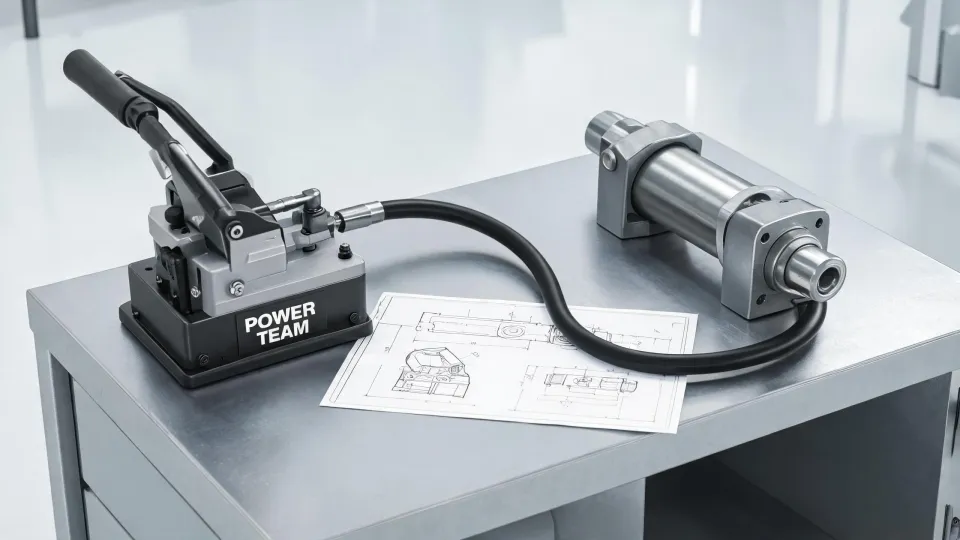
It was 6:17 a.m. on a Tuesday in March 2024 when my phone rang in a way that makes you skip breakfast. A regional steel fabricator had lost their 100-ton hydraulic press. The power-team hydraulic pump on that press was turning, but it wouldn't build pressure. Their customer's parts were due to ship in 36 hours. The normal lead time for power team hydraulic pump parts was seven to ten days.
I've coordinated emergency service for industrial maintenance teams for 12 years and handled more than 200 rush orders. I knew the drill. What I didn't know was how much this one would teach me about quality, first impressions, and the price of being almost right.
The First Decision: Refurbished vs. New
Power Team pumps aren't exotic. That's part of why the situation felt so ridiculous. We weren't hunting for some discontinued part. The challenge was that we needed replacement components right then, not in a week. If you've ever waited on a critical part while a deadline is moving closer, you know the feeling.
We had two options. A refurbished pump assembly was available for $300 less. A new one was $642, plus $238 for overnight shipping. I went back and forth for about twenty minutes. Refurbished made sense on paper. New made sense in my gut, because a 100-ton press under load is not the place to gamble on an unknown wear history.
The new pump assembly was quoted at $642 and the overnight shipping was $238, based on the distributor's March 2024 price list. Don't hold me to those exact numbers today. Prices change. What doesn't change is the math that happens when a deadline is on the line.
I chose new. Then I paid the rush fee.
I'm not a hydraulic engineer, so I can't speak to every failure mode inside that pump. What I can tell you from a field perspective is that the pressure wouldn't climb past 1,500 psi when it needed to hold 10,000. That pointed to the pump, not the cylinder.
That wasn't just a technical detail. It mattered because the customer was watching. They had already made up their mind about us based on what they saw in the first ten minutes. If I looked unsure, they'd look for someone else.
The Wrong Part Almost Cost Us Everything
The box arrived the next day at 2:47 p.m. We unboxed it, checked the part number, and my stomach dropped. It was the vertical-mount version, not the base-mounted unit on that press. The catalog photo looked identical. The nameplate on our pump had a different serial number family than the interchange list on the box.
I don't have hard data on how often expedited parts arrive wrong. I wish I had tracked that metric more carefully. Anecdotally, from 200+ rush jobs, I'd put it at about 5-7%. It never happens when you have time to absorb the mistake.
In hindsight, I should have asked the warehouse to read the exact model and serial number out loud. But with the clock running and the customer standing at the edge of the work cell, I made the call with incomplete information. That's on me.
The right part was at a local distributor 45 miles away. We had one window to get it: a technician could leave immediately, pick it up, and be back before the deadline. I sent him without hesitating. It cost $214 in fuel and overtime, on top of the $238 overnight fee. At that point, I didn't care about the total. I cared about the look on the customer's face.
Tools, Manuals, and a Shot of Perspective
While we waited, the maintenance supervisor asked if I could take a quick look at their small air compressor. There was a 3 gallon air compressor manual sitting on the press base. It felt like a side quest, but reading it helped us find a stuck unloader valve in about fifteen minutes. It also reminded me that documentation is a quality tool, not just paperwork.
When the technician left, I handed him my pliers wrench set. The old hydraulic fittings were rust-caked, and a standard wrench could have rounded them off. That pliers wrench set got them loose cleanly and saved us maybe twenty minutes. Small tools don't feel important until they're the only thing between you and a deadline.
One of the younger mechanics asked whether the pump was a centrifugal pump. That's a better question than it sounds. A hydraulic pump is a positive-displacement pump. A centrifugal pump moves fluid with an impeller—that's what is impeller in centrifugal pump in its simplest form. If we had chased the centrifugal theory, we'd have been replacing wrong parts and reading the wrong pressure curves. Knowing the difference kept the repair honest.
The Fix, the Lessons, and What Quality Really Means
The technician got back at 4:47 p.m. We had the pump reassembled by 5:39 and tested under no load by 5:57. The customer's parts left the building at 6:09 p.m. The deadline was 6:17. We made it by eight minutes. I don't recommend eight minutes.
That day changed our company policy. Now we require a 48-hour buffer on any job that depends on a part we do not physically have in hand. We verify part numbers against the nameplate before paying for expedited shipping. And we keep a short list of local distributors who can actually do a same-day pickup, not just a courier who promises one.
The quality lesson was bigger than logistics. The customer didn't renew their service contract because we were cheap. They renewed because, in the worst possible moment, we looked like a team that knew what it was doing. That's what quality perception really is. It's not polish. It's the ability to stay competent under pressure.
According to the ASME B30.1 standard for jacks and hydraulic presses—which I last reviewed around January 2024—hydraulic equipment should be inspected and maintained in accordance with manufacturer specifications. That standard doesn't mention emergency parts logistics. But it's a good anchor: when you're under deadline, the right hardware and the right information keep you from taking shortcuts.
So here's the thing. Power team hydraulic pump parts aren't just components. They're the reason a press works, a deadline holds, and a customer trusts you. If you've ever had to make a rushed decision on parts, trust me on this one: verify the part twice, pay for the right tool, and read the manual while you're waiting. Quality is how you act when everything is going wrong.

Maren Jorgensen
Maren Jorgensen is an independent hand tool and torque applications analyst covering wrenches, pliers, screwdrivers, hammers, sockets, ratchets, hex keys, and tool sets. She applies ISO 6789-1 torque-tool conformance principles while examining jaw capacity, leverage, fastener engagement, torque range, accuracy, handle geometry, and material hardness. Her practical guides help tradespeople and procurement teams select suitable tools, plan controlled tightening, and compare durability without relying on brand reputation alone.