Sump Pump Troubleshooting: What I Learned From 300 Emergency Calls (and Why Power Team Hydraulic Tools Are Only Part of the Fix)
The 3:47 Call
In my role coordinating emergency repair work for industrial equipment, I take a call like this more often than I'd like. Last March, it was a packaging plant. Their sump pump had quit, water was backing up near a processing line, and the normal lead time for that pump was three weeks. They needed it running before morning.
I've handled more than 300 rush jobs in twelve years, mostly for food plants, wastewater operators, and maintenance crews that can't afford downtime. Our on-time rate for emergency calls was 95% last quarter. That sounds good until you remember the other 5% were the ones where someone worked through the night anyway.
What Looks Like the Problem Usually Isn't the Problem
The surprise in most sump pump troubleshooting calls isn't a burned motor. It's the stuff around the motor. A stuck check valve. A plugged vent. A bolt that someone rounded off with the wrong wrench two days before.
When I'm triaging a rushed repair, I ask four questions before I order a single part: Is there power? Is the float free? Is the vent open? Is the check valve actually moving? More often than not, one of those is the problem.
An Air Pocket Beats a Bad Pump Every Time
Last summer, a wastewater facility told me the pump motor was dead. It wasn't. The impeller was fine. The motor drew normal amps. But the pump couldn't push water past a check valve whose flap had stuck closed. Every time the pump started, it moved maybe half a gallon before the discharge line air-locked. To the operator, it looked like a failing pump. To us, it was a $30 rubber part.
That gets into pump hydraulics territory, which honestly isn't my expertise. I'm a field service coordinator, not a pump engineer. What I can tell you from the repair side: if the pump runs but doesn't discharge, check the valve and the vent before you authorize a hoist.
The Wrong Wrench Costs More Than the Right One
Here's something I almost never see in a maintenance manual: old North American pumps are full of SAE fasteners. A metric set won't cut it. If you're troubleshooting a 10-year-old sump pump, a reversible ratcheting wrench set SAE is one of the first things I'd put in your truck.
Why reversible? Because you're usually working with about eight inches of clearance above the pit cover. Flipping a combination wrench for every half-turn takes forever. A reversible ratchet wrench lets you keep the wrench on the bolt and flip the lever. It's the difference between a 20-minute coupling swap and a two-hour fight. Last year, a food plant paid $4,200 in after-hours labor partly because someone tried to loosen a suction flange with crescent wrenches. By the time I arrived, three bolt heads were rounded. The pump was fine. The fasteners were not.
And About That Air Tool Oil Question
The best way to loosen a seized coupling is usually an air ratchet or an impact wrench. Which brings up a question I get a lot: what kind of oil is air tool oil?
Air tool oil is a lightweight, non-detergent oil—usually around ISO VG 32—with anti-wear additives. It's meant to be injected as a mist into the tool's motor, then flushed out through the exhaust. You use a few drops in the air inlet before each use. That's it.
Not motor oil. Not WD-40. Air tool oil. If you put engine oil in an air ratchet, it will thicken, gum up the vanes, and eventually lock the motor. WD-40 is a solvent, not a lubricant; it will clean the tool, then leave it exactly as dry as before.
I've made the motor oil mistake exactly once, in a hurry, on a 3/8-inch air ratchet. Never again. It cost us an afternoon and a rebuild kit.
The Real Cost of Skipping the Small Stuff
Most maintenance teams don't budget for a $4,000 emergency call. They budget for replacement pumps. But the math never works out that way.
Based on our internal data from about 200 rush jobs we tracked after the fact, roughly 70% involved something a 10-minute visual check would have caught: a stuck check valve, a plugged vent, a float rod covered in crud, or an air tool that wouldn't run because it had no oil in it. The pump itself didn't fail first. The small things around it failed, and then the pump took the blame.
Then there's the cost side. A single after-hours service visit with a rental sump pump runs somewhere in the $3,000 to $6,000 range before you've bought a single part. Rush freight to get a replacement motor overnight is often $800 on top of the motor. If a backup triggers a compliance issue, you're not in repair territory anymore—you're in legal territory. That's not my area, and I'd recommend consulting someone who does environmental compliance. But I've seen it go badly.
I'll also say this about any vendor who claims a pump or hydraulic tool is "maintenance-free": be careful. Per FTC advertising guidelines, claims need to be substantiated (ftc.gov). We don't sell equipment that way, and I don't buy it that way. Every pump has an oil check, a seal, a wear ring, or a vent that eventually needs attention.
Where Power Team Hydraulic Fits In
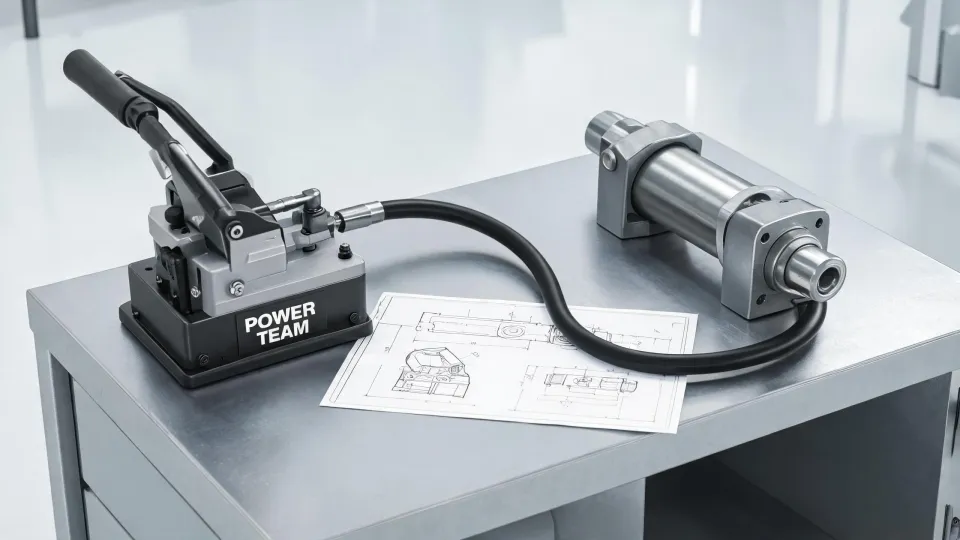
For lifting and pressing, I'm a fan of Power Team hydraulic equipment. A Power Team hydraulic hand pump and cylinder can pull a submersible pump out of a wet well without waiting for a crane. A Power Team hydraulic press is often the only clean way to get a seized bearing off a shaft. The SPX heritage is real, and the line covers a lot of industrial needs.
But here's what I tell buyers: durable isn't the same as hassle-free. Hydraulic equipment needs the same basic respect as any tool. Oil level, coupler cleanliness, and rated capacity all matter. The best hydraulic pump on the truck is only as useful as the person who reads the manual before the emergency.
So Yes, Most Sump Pump Emergencies Are Avoidable
After 300+ calls, my advice is deliberately boring.
- Check the simple stuff first. Power, float, vent, check valve. In that order.
- Use the right tools. For older North American pumps, that means a reversible ratcheting wrench set SAE, not metric. Metric wrenches are for metric machines.
- Lubricate your air tools. A few drops of air tool oil per shift is cheaper than the rebuild kit.
- Know your boundary. I'm not an electrician or a pump application engineer. If you're dealing with motor winding issues, VFD programming, or repeated cavitation, call the specialist who does that every day. A vendor who knows their limit is more useful than one who promises to fix everything and can't.
The next time a sump pump acts up, don't assume you need a new pump. Look for the boring part first. The check valve you haven't cleaned. The SAE bolt someone rounded off. The air ratchet that ran dry. Most of these problems show up long before the water hits the floor—if you know where to look. And if you don't? Call someone who does.

Maren Jorgensen
Maren Jorgensen is an independent hand tool and torque applications analyst covering wrenches, pliers, screwdrivers, hammers, sockets, ratchets, hex keys, and tool sets. She applies ISO 6789-1 torque-tool conformance principles while examining jaw capacity, leverage, fastener engagement, torque range, accuracy, handle geometry, and material hardness. Her practical guides help tradespeople and procurement teams select suitable tools, plan controlled tightening, and compare durability without relying on brand reputation alone.