Can You Weld a Hydraulic Cylinder? Three Scenarios, Three Different Answers
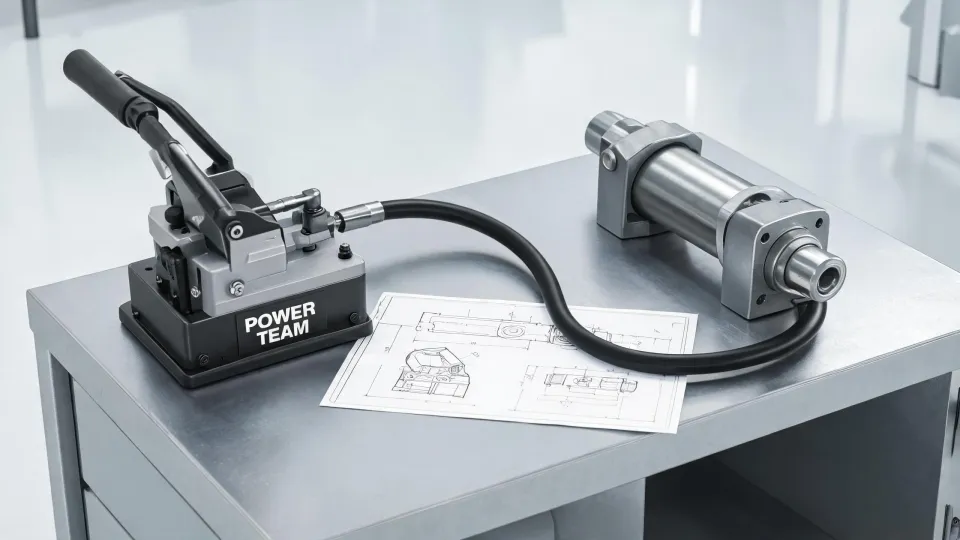
-
Can You Weld a Hydraulic Cylinder? It Depends on the Scenario
-
Scenario 1 — Surface Damage on a Tie-Rod Cylinder: Yes, With Limits
-
Scenario 2 — Structural Crack on a Welded-Body Cylinder: No, and Here's Why
-
Scenario 3 — The "Failed" Cylinder That Was Never the Cylinder
-
How to Tell Which Scenario You're In
-
The Tools Worth Having When You Open Up a Cylinder
-
The Checklist I Use Now (47 Errors Caught and Counting)
Can You Weld a Hydraulic Cylinder? It Depends on the Scenario
"Can you weld a hydraulic cylinder?" I've been asked that question by maintenance leads, procurement managers, and machine operators who were told "the press is down and it's the cylinder's fault." The honest answer is not a simple yes or no. It depends on which of three scenarios you're in:
- Scenario 1: Surface damage on a tie-rod cylinder — weld repair is a legitimate option.
- Scenario 2: A structural crack on a welded-body cylinder — replacement is the only safe answer.
- Scenario 3: A "failed" cylinder that was never the fault of the cylinder — check the hydraulic oil first.
I've handled repair orders for power-team hydraulic equipment for 12 years. I've personally made (and documented) 17 significant mistakes, totaling roughly $31,000 in wasted budget. That's my tuition. Here's what it bought me: a clear way to sort cylinder repair decisions without losing money or sleep.
Scenario 1 — Surface Damage on a Tie-Rod Cylinder: Yes, With Limits
Scenario 1 is the good one. You have a tie-rod cylinder — the kind with steel rods running along the outside of the barrel, holding the end caps together. If your power team hydraulic press is moving thousands of cycles a year, this is likely what you're working with.
If the damage is on the surface — pitting from corrosion, a gouge from a dropped tool, shallow scratches that don't penetrate deep into the barrel wall — weld repair is a legitimate option. A certified weld shop can build up the damaged area, machine it back to spec, and the cylinder goes on for years.
The cost difference is substantial: repairable surface damage typically runs $300–800 versus $2,000–5,000 for a replacement cylinder (based on typical shop quotes in 2024; verify current pricing for your bore and stroke).
But there's a catch. The repair has to be done with procedure. In my first year (2013), I sent a customer's cylinder out for pitting repair without specifying preheat or interpass temperature. It came back looking perfect. Three months later it was leaking through the weld zone. Re-do cost: $890 and a week of downtime the customer never got back. (The shop didn't volunteer its weld procedure questions until the second round.)
The lesson: ask the repair shop what the base material grade is, what preheat and post-weld treatment they plan, and how they'll verify the weld. If they look confused by the question, drive to the next shop.
Scenario 2 — Structural Crack on a Welded-Body Cylinder: No, and Here's Why
Now the scenario that gets people into trouble. A welded-body cylinder — sometimes called a mill-type cylinder, built to the ISO 6022 series standard — has a one-piece barrel with welded end caps. It's already welded when it ships from the factory.
Which is exactly why so many people assume it's a no-brainer to weld it again. "It's already welded, just lay another bead on it." I understand that instinct. I had it myself.
It's wrong.
When you weld a structural crack on a welded-body cylinder, the heat-affected zone (HAZ) from your new weld overlaps the HAZ from the original manufacturing weld. The microstructure changes, stress risers form, and because you can't properly re-heat-treat a large cylinder barrel in a typical repair shop, those stress risers stay. The cylinder might hold pressure for a week or a month. Then the crack comes back — typically worse.
I know because I did it. In 2016, I went back and forth between welding a mill-type cylinder and replacing it. The weld repair was $900. A replacement was $4,200. On paper, the repair made sense. My gut said the structural integrity wouldn't be the same. I chose the repair anyway, and the dye-penetrant test after the weld looked clean. Then the first full-pressure cycle opened a pinhole leak right next to the weld bead. A pinhole, not a burst. I was lucky.
The surprise wasn't that it leaked. It was how fast it failed. That invoice taught me more than any training course: for a structural crack on a welded-body cylinder, replacement is the answer. It feels expensive in the moment — $2,500–6,000 for a typical mill-type replacement (verify current OEM pricing for your size). Compared to the downtime and the liability of a barrel failure under pressure, it's cheap.
The one exception I'll offer: a temporary low-pressure emergency patch to get you through to a replacement, at no more than half rated pressure. That's a Band-Aid, not a repair.
Scenario 3 — The "Failed" Cylinder That Was Never the Cylinder
This is the scenario I wish I'd understood years earlier: the "damaged" cylinder that isn't damaged at all.
In September 2022, a customer reported that their power team hydraulic press was drifting under load. Slow operation, weak cycles, the classic "seals are shot" story. I approved a seal kit and sent a tech out. He isolated the cylinder from the circuit, applied pressure, and it held perfectly.
The real problem? The power team hydraulic oil. It had passed its service life, viscosity had shifted, and the pump couldn't maintain consistent output. The cylinder was fine. The oil was the villain.
After we drained and refilled with the recommended power team hydraulic oil grade, the press cycled back to spec. No cylinder work. No seal kit. $35 in oil analysis and $80 in fluid fixed a problem that could've turned into a $3,200 cylinder replacement. (And that's why "check the oil before you blame the cylinder" is painted on the inside of our toolbox lid.)
Now, I have mixed feelings about the branded-oil debate. On one hand, I've seen no-name hydraulic oil work perfectly fine in low-duty applications. On the other, I've opened up reservoirs where someone saved $80 on an oil change and paid $2,400 in premature pump and cylinder wear. The viscosity grade in your press manual is there for a reason — especially when the spec calls for power team hydraulic oil on high-pressure equipment. Follow the spec.
The practical move: if your press seems weak, drifts, or runs hot, test the oil before you spend money on cylinder inspection. A fluid analysis costs $25–50 (based on standard lab rates, December 2024; verify availability in your area). That's a rounding error compared to a seal kit replacement or a new barrel.
How to Tell Which Scenario You're In
Here's the decision path I use before any cylinder work gets approved:
- Is there visible damage? A crack on the barrel weld seam of a welded-body cylinder — that's Scenario 2. Get a replacement quote. Surface pitting or gouges on a tie-rod barrel that still holds pressure — that's Scenario 1. A certified weld shop is a real option.
- Is the problem performance-based? Drifting, weak cycles, slow movement, no visible leaks — that's Scenario 3. Test the oil before you authorize any disassembly.
- Are you working on assumptions? Nine times out of ten, the issue is more boring than a structural failure. Verify before you spend.
Ten minutes of checking beats a $3,200 guess. That's not a metaphor. In Q1 2024, I authorized a cylinder replacement that turned out to be completely unnecessary — the problem was a worn pump coupling. I checked the cylinder's symptoms and skipped the pump's inputs. $3,200, straight down the drain. I documented it (painfully) and added it to the checklist.
The Tools Worth Having When You Open Up a Cylinder
If you do get to disassembly, the right tools matter more than the right intentions. For years I used pipe wrenches and universal joints on gland nuts, and I rounded off plenty of hex corners. (The "pipe wrench incident" is a team legend now. Not a proud one.)
Since 2021, I've carried a joker wrench — the ratcheting open-end design works well for gland nuts and port fittings in tight spaces. I pair it with a 30 piece ratcheting wrench set that covers tie-rod nuts, mounting bolts, and end cap fasteners. Ratcheting box ends mean fewer skinned knuckles and better torque control on bolts that are hard to swing.
You don't need the most expensive set in the catalog. You need one that doesn't slip when you're leaning into a 1-1/8" nut. That's where the bargain sets fail. Buy for torque, not for looks.
The Checklist I Use Now (47 Errors Caught and Counting)
As of January 2025, our team has caught 47 potential errors with this pre-repair checklist. I wish I'd had it from day one:
- Oil first. Test viscosity, water content, and contamination before you disassemble anything.
- Verify the crack. Dye-penetrant test any suspected crack. If you don't know its depth, you don't know anything.
- Know your cylinder type. Tie-rod vs. welded-body changes the entire repair-vs-replace calculation.
- Structural crack on a welded-body barrel? Stop. Replacement is the answer.
- Ask the weld shop about material grade, preheat, and post-weld heat treatment. If they don't have a procedure, find a different shop.
I'm not going to tell you every hydraulic cylinder can be saved. That would be a lie, and I've built the last few years of my career on not selling people parts they don't need. What I'll tell you is: the answer to "can you weld a hydraulic cylinder" changes the moment you know what kind of cylinder you have, where the damage is, and what the oil looks like.
Ask those three questions before you commit to a repair budget. The $31,000 I spent not asking them is your proof.

Maren Jorgensen
Maren Jorgensen is an independent hand tool and torque applications analyst covering wrenches, pliers, screwdrivers, hammers, sockets, ratchets, hex keys, and tool sets. She applies ISO 6789-1 torque-tool conformance principles while examining jaw capacity, leverage, fastener engagement, torque range, accuracy, handle geometry, and material hardness. Her practical guides help tradespeople and procurement teams select suitable tools, plan controlled tightening, and compare durability without relying on brand reputation alone.