How to Measure a Hydraulic Cylinder for Replacement (A Quality Inspector’s Checklist)
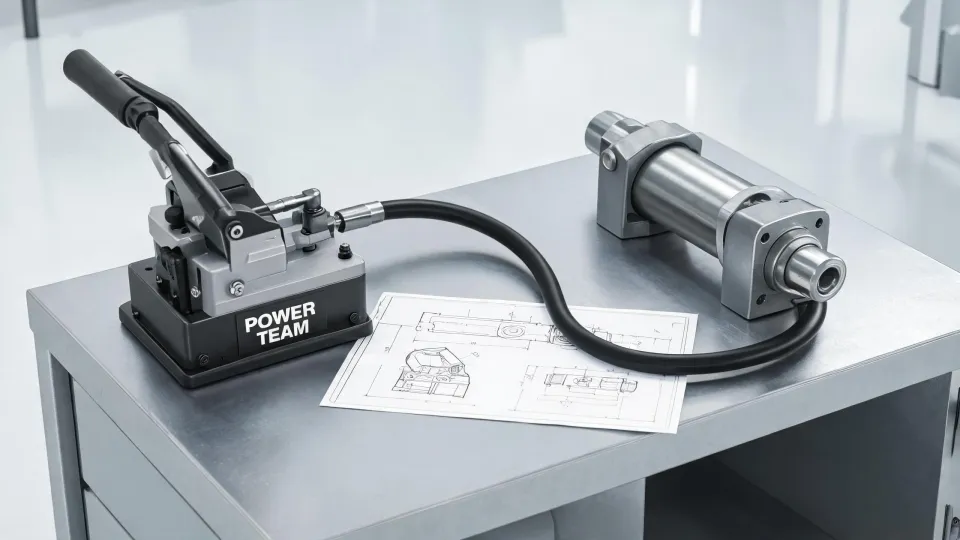
Replacing a hydraulic cylinder comes down to five measurements: bore, rod diameter, stroke, port size, and mounting style. That’s it. Get those right, and the replacement will fit and operate as intended. Get one wrong, and you’re looking at a costly redo—or a safety hazard.
I’m a quality compliance manager at a Power Team Hydraulics distribution facility. Over the last four years, I’ve reviewed roughly 200 cylinders annually before they reach customers. In Q1 2025, I rejected 8% of first deliveries because of dimensional mistakes. Maybe 7.8%, I’d have to check the system. The most expensive one: a $22,000 order where the bore was mis-specified by 0.015 inches. The vendor said that was "within industry standard." It wasn’t.
The Real Reason Most Replacement Cylinders Fail
It’s not the manufacturing. It’s the measurement. People copy the worn-out part number or read a faded nameplate and assume what they need is the same. It rarely is.
I saw this firsthand when I compared a customer’s “standard 3.5-inch bore” cylinder with the actual spec on our shelf. The nameplate was unreadable, so they guessed. Side by side, the rod was 1.5 inches instead of 2 inches—which changed the output force by over 40%. The contrast made me realize: never trust the old part; trust your calipers. What I mean is the old part is a starting point, not the final answer.
The Five Measurements You Actually Need
1. Bore Diameter
Measure the inside diameter of the barrel with a bore gauge or inside micrometers. Not a tape measure. A 4.00-inch bore might actually be 4.01 after wear, but your replacement needs to match the original spec, not the worn dimension. Normal tolerance for a standard cylinder bore is plus/minus 0.002 inches. If you’re off by more than that, the seals and rod bearing won’t seat correctly.
2. Rod Diameter
Measure the rod at three points: near the clevis, mid-stroke, and near the gland. Rods wear in the middle. A micrometer is the right tool. For example, a 2.00-inch rod might read 1.965 inches if it’s been scored. If you order a 2-inch rod replacement but the original was actually a metric 50mm, you’ll have problems. "It’s close enough" is not a spec.
3. Stroke Length
Stroke is the distance the piston travels from full extension to full retraction. To measure correctly: fully extend the cylinder, measure pin-to-pin, then fully retract and measure again. The difference is stroke. Many people just read the nameplate. That’s fine if the plate is legible and the cylinder wasn’t modified. But we’ve seen cylinders with spacers that change the stroke—the plate wasn’t updated.
4. Port Size and Type
This is the one that gets missed. Your cylinder might have SAE O-ring ports, NPT threads, or metric BSPP. The thread size matters. In Q4 2024, we received a batch of sixty cylinders where the ports were JIC instead of SAE. They were otherwise perfect. The customer’s hoses wouldn’t connect. The whole batch was redone at the vendor’s cost, but that’s two weeks of downtime.
5. Mounting Style and Dimensions
Mounting style is the physical configuration that attaches the cylinder to your machine. Clevis, cross-tube, flange, foot mount, or trunnion. You need pin diameters, center distances, and bolt patterns. Even if you have the right bore and stroke, a mounting tolerance off by 1/16 of an inch will create side load and premature seal failure. If you’re planning to weld a new bracket instead of measuring the original, stop. Welders create brackets; they don’t fix a mismeasured cylinder.
What a Quality Inspector Wants You to Know
When we send a replacement cylinder, we don’t just check the measurements. We verify the part number against the original drawing, confirm the port threads with the customer, and ask for mounting photos if there’s any doubt. That workflow came from a lesson learned the hard way.
In 2022, we implemented a verification protocol that requires a signed dimensional checklist for every custom replacement. That simple step cut our return rate by 34%. It also increased customer satisfaction scores, because the first yoke they ordered actually fit.
"Look, I’m not saying budget cylinders are always bad. Here’s the thing: they’re riskier. The cheapest quote often doesn’t include the cost of a missed measurement."
Before You Measure: Check Your Equipment Compatibility
If you’re pairing a replacement cylinder with an existing hydraulic pump, you need to match more than the cylinder’s dimensions. Check the pump’s flow and pressure rating. For instance, an SPX Power Team torque wrench pump is designed for high-pressure hydraulic tools. If you’re using it to power a large-bore cylinder, the pump’s displacement might not cycle fast enough. We’ve seen this on jobs where someone wanted to upgrade a 5-inch bore cylinder without considering the pump volume.
Similarly, don’t forget about your submersible pump in the cooling circuit. It’s a different component, but it has a spec too. I’ve seen a hydraulics system fail because the submersible pump was upgraded with a higher flow rate than the heat exchanger could handle. That’s not a cylinder issue—but it’s the same mindset: verify the numbers before you buy.
When NOT to Measure It Yourself
There are cases where self-measuring isn’t the right move:
- If the cylinder is under warranty—let the manufacturer inspect it first.
- If the cylinder has custom coatings—chrome only works if the base steel is within spec.
- If your mounting is unusual—like a trunnion mount with tapered pins. A dimension mistake could ruin the block, not just the cylinder.
That said, for most standard industrial cylinders, a meticulous owner can measure successfully. Just don’t skip the step. A tape measure might get you within a quarter inch. You need within a thousandth for bore and rod.
Final Point: Overpromising and Hidden Costs
Per FTC guidelines, equipment claims have to be substantiated. That’s why we don’t say a replacement cylinder "fits all hydraulic systems." No one can honestly make that promise. Similarly, the real cost of a cylinder isn’t just the price tag. Include shipping, potential rework, downtime, and the cost of failure. The lowest quote often isn’t the lowest total cost. I’ve learned to ask, "What’s NOT included?" before asking the price.
And shipping? Don’t try to ship a 30-lb cylinder via a USPS flat envelope. USPS Business Mail 101 defines standard letter and large-envelope dimensions; a cylinder is not a flat. Use freight or ground parcel. It’s a matter of dimensions, not just weight.
Many of our Power Team cylinders feature a 100% welded barrel construction to eliminate leaks under extreme pressure. If you hear "100 welder" on the shop floor, that’s the same thing—a fully welded barrel. It also means you shouldn’t attempt to modify it with a torch. The weld is part of the pressure containment.
Boundary Conditions
This advice worked for the cylinders I’ve reviewed in a U.S. industrial context. If you’re working with imported components that use metric threads or non-standard mounting patterns, your experience might differ. And this was accurate as of Q1 2025. The supply chain changes quickly—lead times and availability should be verified with your distributor before you order.
Also, online printers like 48 Hour Print are fine for standard business cards, but for custom die-cut jobs you go to a specialty shop. Hydraulic cylinders are the same. Standard sizes are easy. Custom mounts, special threads, or exotic coatings are not a one-click order. When we need a cylinder that matches an obscure European mount, we don’t try to make a standard one fit. We measure, document, and send the spec to an engineer.
Measuring a hydraulic cylinder for replacement isn’t complicated. But it requires precision. The five numbers—bore, rod, stroke, ports, mounting—will save you from spending more than you planned. And if you ever doubt the measurement, do what our customers do: send photos, ask for a drawing review, and get it in writing. Done.

Maren Jorgensen
Maren Jorgensen is an independent hand tool and torque applications analyst covering wrenches, pliers, screwdrivers, hammers, sockets, ratchets, hex keys, and tool sets. She applies ISO 6789-1 torque-tool conformance principles while examining jaw capacity, leverage, fastener engagement, torque range, accuracy, handle geometry, and material hardness. Her practical guides help tradespeople and procurement teams select suitable tools, plan controlled tightening, and compare durability without relying on brand reputation alone.